

Think the State Will Force BESS Incident Cleanup? Think Again.
When a BESS Incident Occurs, Who Pays?
Short answer: Residents do — unless local officials act before something happens.
Most people assume that if a utility scale Battery Energy Storage System (BESS) contaminates soil or groundwater, government agencies will step in and make it right.
That assumption is wrong.
Under Michigan law, the burden of prevention falls on local government, and the burden of consequences can fall on residents.
What Would Actually Happen After a BESS Incident in Michigan
EGLE’s Remediation and Redevelopment Division has confirmed in writing:
- EGLE typically becomes involved after contamination is identified
- The developer generally determines the nature and extent of contamination
- Michigan law does not automatically require full cleanup
Instead of restoration, residents may be left with:
- Banned or capped drinking water wells
- Deed restrictions
- Asphalt or concrete caps over contaminated soil
The contamination may remain – an example of this is the EGLE response to the KL Ave landfill contamination in Kalamazoo, MI.
Residents are simply told not to use their land or water.
Would the EPA Step In Instead?
Federal agencies like the EPA can require cleanup under federal law — but they usually act only after a significant release and often only when state response is deemed insufficient.
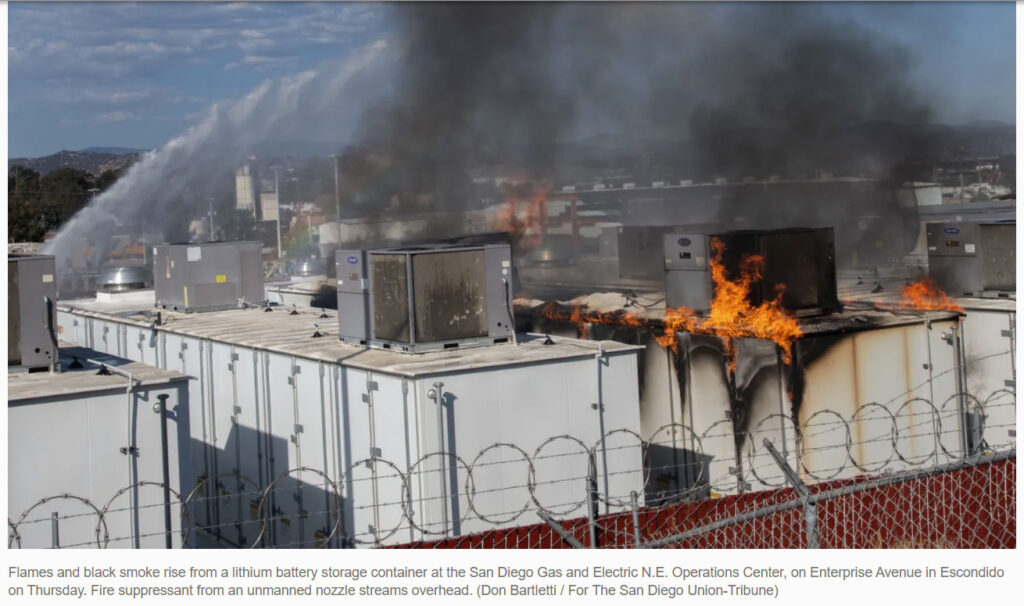
Across the country, most BESS incidents end with:
- Developer funded investigations
- Agency concurrence letters based on the developer’s findings
- “No further action” determinations
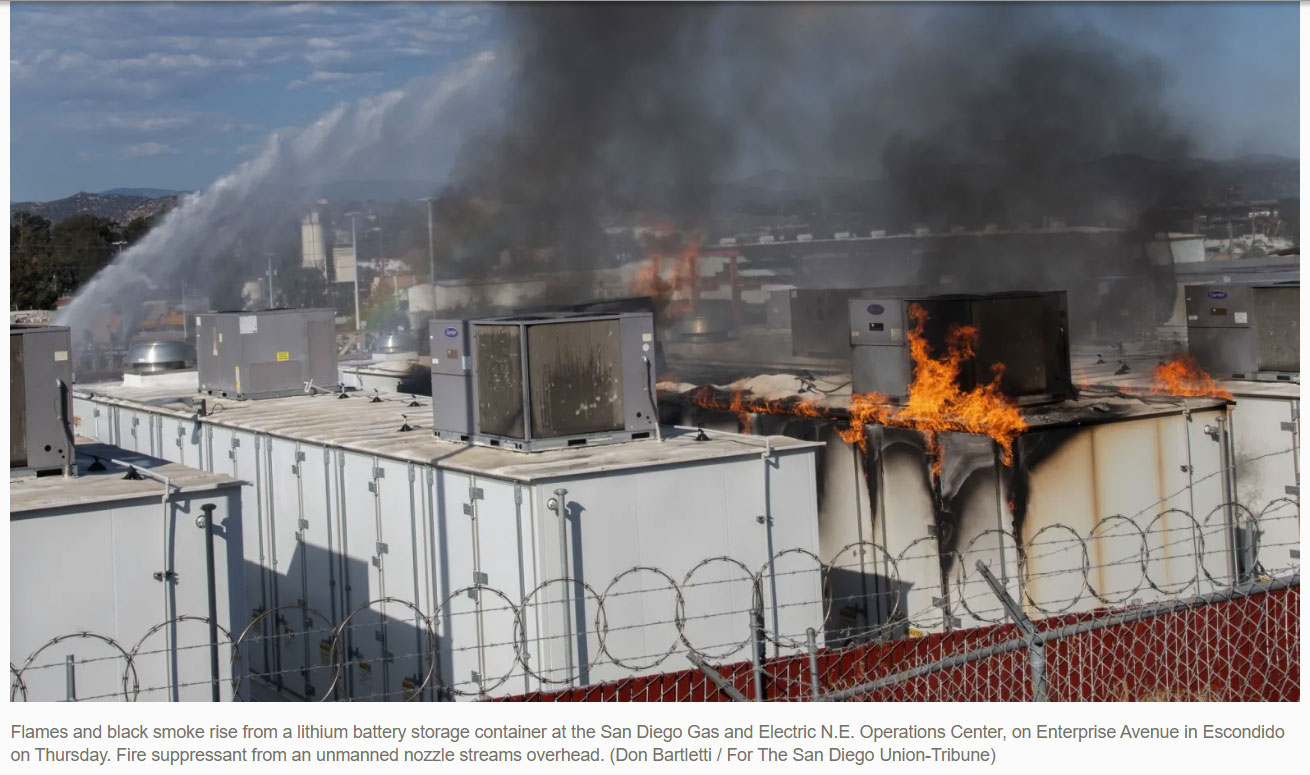
The Moss Landing battery site in California shows the exception: deeper contamination concerns were uncovered only after independent testing was forced.
The EPA’s remedy to the KL Ave landfill contamination is an example. – “Institutional controls play an important role in site remedies because they reduce exposure to contamination by limiting land or resource use. ”
The EPA is not a prevention system, nor does federal law guarantee full cleanup or restoration of land and water to their original condition.
Residents Become Responsible for Contamination Concerns
What are residents typically left with if groundwater is impacted:
- Permanent loss of well use
- Ongoing bottled water costs
- Reduced property values
- One remaining option: expensive, long litigation
At that point, regulators say the public health risk is “managed,” developers say they complied, and families are left to fight in court.
The Responsibility Sits with Township Officials
The Michigan Constitution is clear:
“The conservation and development of the natural resources of the state are hereby declared to be of paramount public concern in the interest of the health, safety and general welfare of the people.” — Michigan Constitution, Art. IV, §52
Every township official takes an oath of office to uphold this Constitution and the laws enacted under it. That duty does not disappear because a project involves energy or because Public Act 233 exists.
When a project is sited by the Michigan Public Service Commission (MPSC) under PA 233, the MPSC does not take over responsibility for protecting local groundwater, wells, or public health. The siting framework assumes that local governments continue to exercise their police powers, including hazardous materials and water protection.
Once township officials are on notice of foreseeable risks and gaps in their ordinances, failure to require safeguards becomes a local policy choice — and the record matters.
Local government is the first and last line of defense for safety.
Why Local Hazardous Materials Ordinances Matter
Strong hazardous materials ordinances are not extreme. They are standard risk-management tools already expected by experienced developers.
Local governments are the authority that can:
- Strengthen cleanup requirements
- Control contamination investigations
- Require groundwater restoration
- Mandate financial assurance for contamination
- Protect neighboring wells and farmland
Without these protections, the public assumes the risk, the cost, and the consequences of a failure — while developers may meet minimal compliance and later exit the project.
Importantly, hazardous materials protections must apply as a condition of operating within the municipality, not merely as discretionary siting standards. While Public Act 233 can limit how siting criteria are applied, it does not prevent municipalities from enforcing generally applicable hazardous materials requirements as part of doing business locally.
Cleanup FAQ
Is a developer required to clean up contaminated soil or groundwater?
Not necessarily. Under Michigan law, contamination may be allowed to remain if groundwater use is restricted and barriers are used to prevent exposure, rather than requiring full cleanup and restoration. However, local hazardous materials ordinances can impose stricter requirements. When such ordinances are in place and developers are on notice, additional cleanup, removal, or financial assurance obligations may apply.
What if local government refuses to update its ordinance?
Once local government is put on notice of foreseeable risks and chooses not to act, those risks are no longer hypothetical. Ignoring known gaps in protection becomes a policy choice that conflicts with the constitutional duty to protect public health and natural resources. If harm occurs, that record can become relevant in accountability, litigation, and public review.
In Oshtemo Township, why has this BESS issue become so contentious?
In Oshtemo Township, Kalamazoo County, Michigan, concerns about due diligence, transparency, and resident protection have contributed to a recall effort, allowing voters to decide whether current leadership is adequately prioritizing public health and safety.
Does a Hazardous Materials Ordinance stop a BESS project?
No. A hazardous materials ordinance does not prohibit a BESS project. It helps local government meet its constitutional duty to protect public health and natural resources and reflects standard requirements routinely accepted by experienced developers.
Can nearby wells be permanently shut down?
Yes. EGLE has identified groundwater use restrictions — including prohibitions on drinking water wells — as a common response following contamination.
Does Public Act 233 override local environmental protections?
No. Public Act 233 affects siting authority for large scale renewable energy utility projects but does not remove local police powers or a township’s constitutional duty to protect public health and natural resources.
Don’t permits already require cleanup if something goes wrong?
Usually no. Most permits focus on construction and operation, not worst‑case failure or long‑term contamination. EGLE permits do not automatically require full remediation. Projects sited by the Michigan Public Service Commission rely on regulatory compliance and post‑incident enforcement frameworks, not guaranteed cleanup or environmental restoration.
Has a developer ever avoided cleanup after an incident?
Yes. In multiple cases nationwide, developers have limited cleanup, transferred assets, or declared bankruptcy, leaving long-term impacts behind. Search terms to explore include: “energy project contamination bankruptcy,” “industrial site cleanup bankruptcy,” “limited liability environmental cleanup,” “Superfund orphan site.”
Won’t insurance cover contamination?
Not necessarily. Environmental contamination can be excluded, capped, or time‑limited in insurance policies, especially for groundwater impacts. Residents should not assume insurance will pay and may wish to review exclusions with their insurance agents.
Why isn’t state or federal law enough?
Because those laws are primarily designed to manage risk after damage occurs, in the name of “public health”, not guarantee restoration. The Michigan Constitution places responsibility for protecting public health, safety, and natural resources with government at all levels — including local government — which is why local ordinances remain essential and why higher levels of government do not consistently prevent harm in advance.
Take Action Today
If protections are not in place before approval, residents may pay the price later. Residents should call, email, or speak at public meetings to insist their local government immediately adopt or strengthen a Hazardous Materials Ordinance that:
- Applies to all large scale hazardous material projects within the municipality, regardless of who processes or sites the application
- Requires bonding or other financial assurance sufficient to cover worst-case cleanup
- Mandates full remediation and restoration of soil and groundwater — not just containment
- Prohibits permanent well bans or deed restrictions as a substitute for actual cleanup
- Requires independent, third-party investigation and monitoring, selected by the township, paid for by the developer, and accepted for regulatory and enforcement purposes
- Put these protections in place now. Without them, residents are left holding the risk and the bill while developers exploit gaps and cherry-pick weaker standards.
- These safeguards should be the default for any hazardous industrial project — not an exception.