
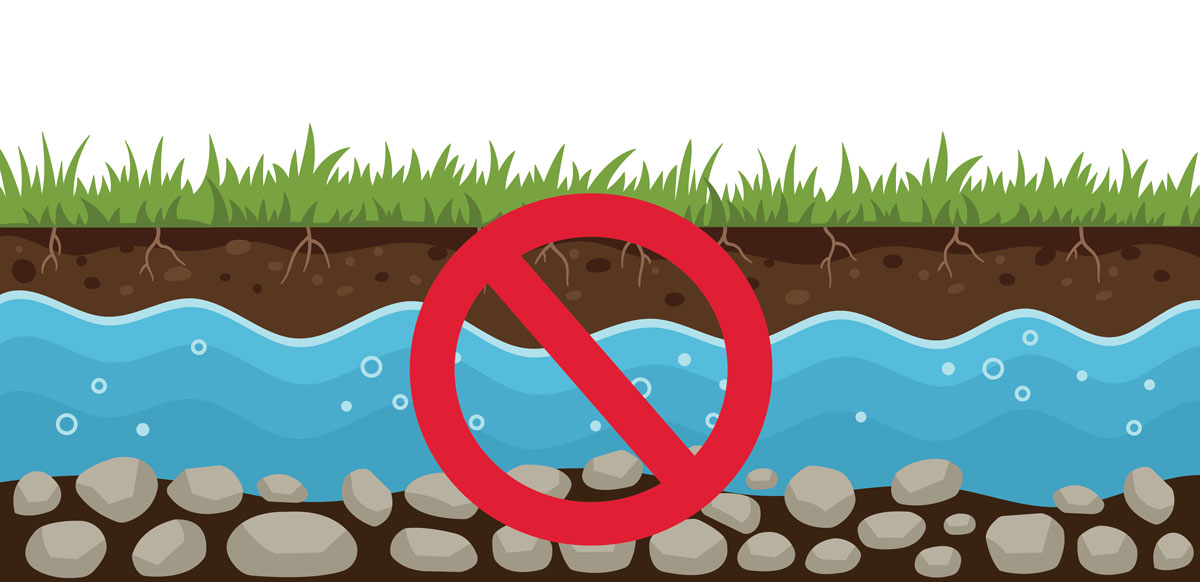
We’ve Lived Through One Groundwater Crisis in Kalamazoo MI. We Cannot Ignore Risk the Second Time.
The K & L Avenue Landfill is an 87-acre former sanitary and industrial landfill in Oshtemo Township. It operated from the 1950s through 1979 before contaminants from landfill waste were discovered in nearby residential drinking water wells.
What began as routine waste disposal became a decades-long groundwater crisis.
From Local Dump to Federal Superfund Site
In 1982–1983, the landfill was placed on the U.S. EPA’s National Priorities List as a Superfund site.
The remedy included:
- Installing a protective landfill cap
- Long-term groundwater monitoring
- Replacing contaminated private wells with deeper wells or municipal water
- Restricting use of the shallow aquifer
- Ongoing operation and maintenance
The cap was completed in 2005–2006. An active gas extraction system followed in 2007–2008. Monitoring wells remain in place today.
More than 40 years later, oversight continues.
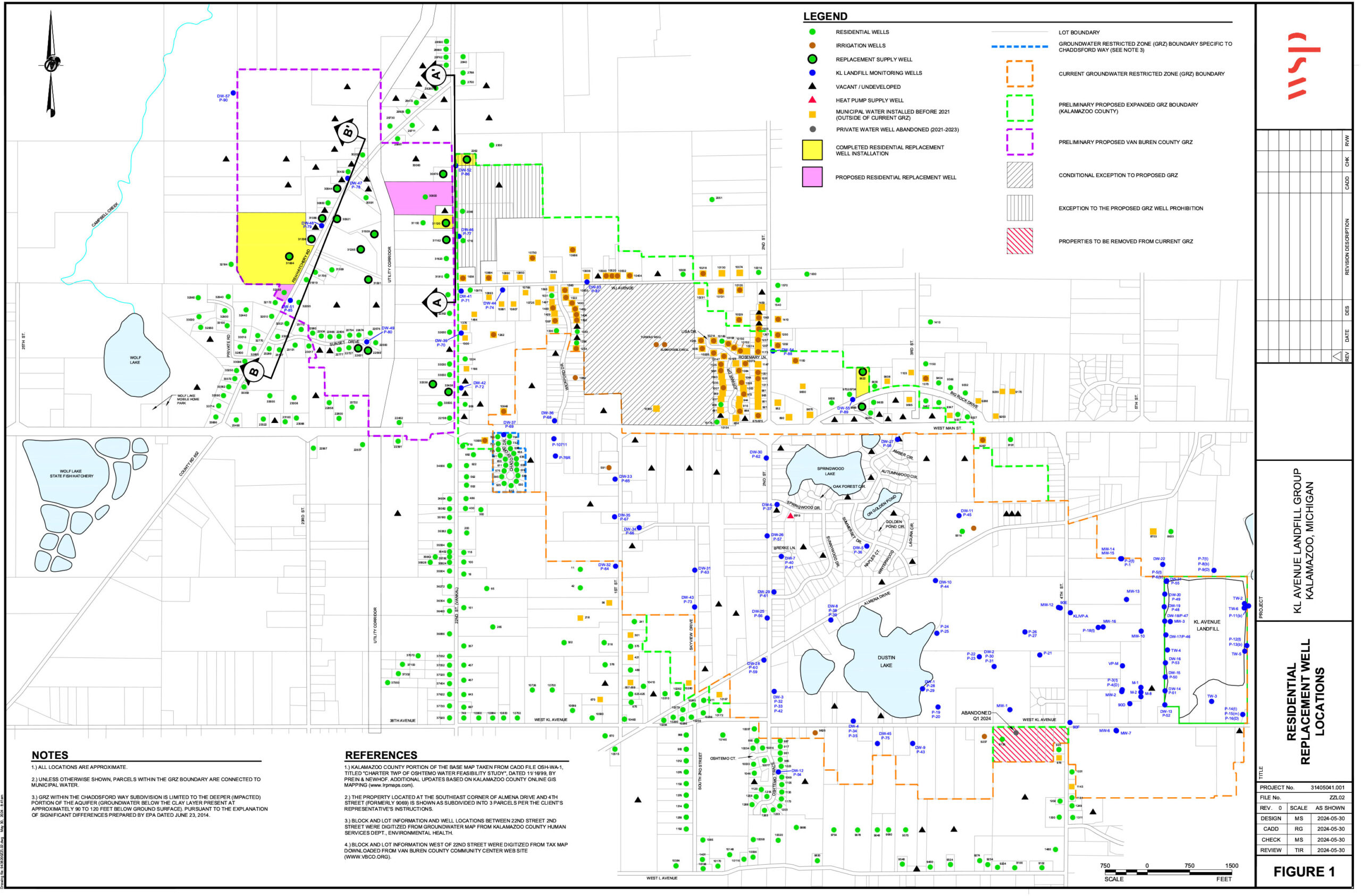
EPA March 2025 Report Page 73 Spring 2024 Municipal Water Connection and Residential Supply Well Replacement Map As Of December 2023 (2)
The Plume That Has Not Disappeared
Many contaminants have declined over time, but groundwater impacts three compounds remain in the area including: 1,4 dioxane, benzene, PFAS.
The primary contaminant of concern, 1,4-dioxane, is still detected in portions of the groundwater plume at levels above Michigan drinking water criteria. Institutional controls remain necessary to protect residents.
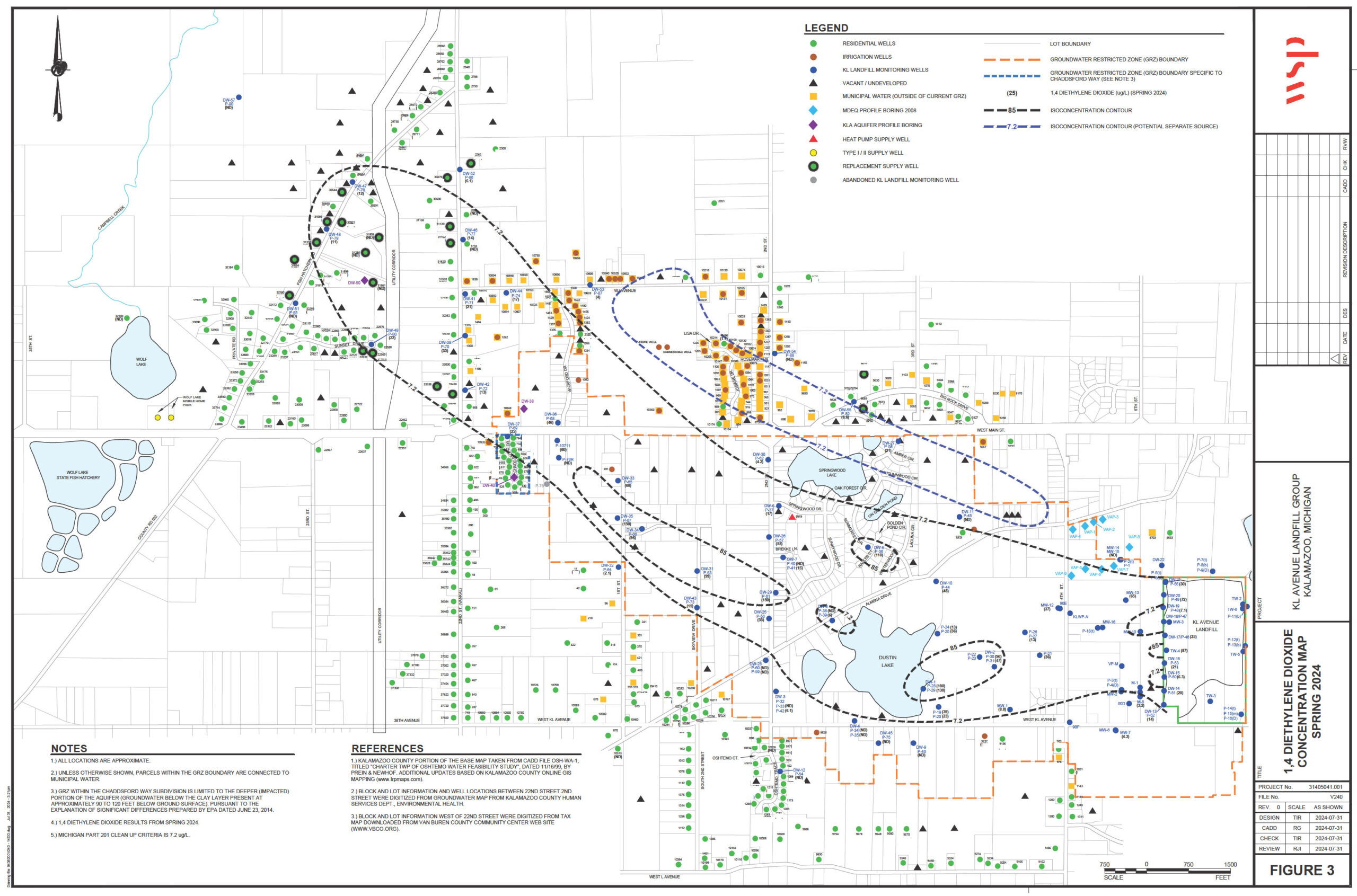
EPA March 2025 Report Page 84 Spring 2024 Isoconcentration Map for 1,4-dioxane (2)
Impacts extend beyond Kalamazoo County into portions of Van Buren County, where private wells draw from the same shallow aquifer.
“The groundwater flow is not always completely predictable on our part and contamination flow is not always completely predictable. And so to protect against that unpredictability of where contamination might go, we include areas that are currently not identified as contaminated but could potentially be,” said Joan Tanaka, the EPA’s branch chief for remedial response programs in the Great Lakes states. (1)
The lesson is simple:
When groundwater is contaminated, the consequences last for generations.
Why This History Matters Now
Large Battery Energy Storage Systems (BESS) are now being proposed over this same shallow aquifer less a mile to the south.
No one is claiming modern battery facilities are identical to a 1970s landfill. They are not.
But when industrial-scale hazardous materials are placed above a drinking water source, risk —at any level — must be evaluated with seriousness and foresight.
The KL Landfill was once viewed as manageable. It became a Superfund site.
Communities rarely regret requiring too many safeguards. They often regret requiring too few.
PA 233 Does Not Remove Local Responsibility to Protect Residents
Some officials have suggested that state law — specifically PA 233 — leaves townships powerless.
That is not accurate.
PA 233 may shift siting authority to the Michigan Public Service Commission if a developer chooses that process. It does not eliminate a township’s police power to protect public health, safety, and welfare.
Local governments can still:
- Strengthen hazardous materials ordinances
- Require independent environmental monitoring
- Establish clear remediation standards
- Demand meaningful financial assurance and bonding
- Ensure taxpayers are not left responsible for cleanup
- Those protections are policy choices.
They are not prohibited by PA 233.
Who Pays If We Get It Wrong?
The KL Landfill demonstrates what happens when contamination moves through groundwater over time. Responsible parties change. Companies dissolve. Individuals pass away. Monitoring and restrictions remain.
Across the country, communities have learned that when financial assurance is weak or absent, cleanup costs do not disappear — they shift.
The real question facing Oshtemo is not whether disaster is certain.
It is whether we require clear remediation standards and sufficient bonding before industrial facilities are built over a vulnerable aquifer.
“Hands are tied” is not a legal conclusion.
It is a choice.
For More Information on the KL Landfill Visit:
- 09-05-2025-Groundwater Restricted Zones Map: https://mi-safety.org/wp-content/uploads/2026/02/KL-GRZ-Map-02112025.pdf
- (1) Moving Toxic Plume A Concern For Oshtemo Drinking Water WMUK Published March 25, 2016: https://www.wmuk.org/wmuk-news/2016-03-25/moving-toxic-plume-a-concern-for-oshtemo-drinking-water
- (2) EPA 2025 Site Review: https://semspub.epa.gov/work/05/999999.pdf
- EPA Superfund Site: https://cumulis.epa.gov/supercpad/SiteProfiles/index.cfm?fuseaction=second.redevelop&id=0502812
- Wikipedia: https://en.wikipedia.org/wiki/K_%26_L_Avenue_Landfill
- West KL Landfill Site: https://westklavelandfill.com/
- EPA – NPL Fact Sheet: https://semspub.epa.gov/work/HQ/182850.pdf