

Why Is Oshtemo Protecting Industrial Land From Large-Scale Solar — But Not Rural Residential Homes?
Across Michigan, townships are already fighting over giant solar fields being placed in rural and residential-adjacent areas. Farmland, open space, and rural neighborhoods are often targeted first because they have the acreage large energy developers want. Oshtemo should be learning from that pattern — not repeating it.
Now, with utility-scale battery energy storage being proposed near homes, farms, wells, wetlands, and the county aquifer, this question matters more than ever:
Why is Oshtemo protecting Industrial and Commercial land from large-scale solar, while leaving Rural Residential areas exposed to large-scale energy infrastructure?
What the Solar Ordinance Says
Oshtemo’s solar ordinance does one very clear thing:
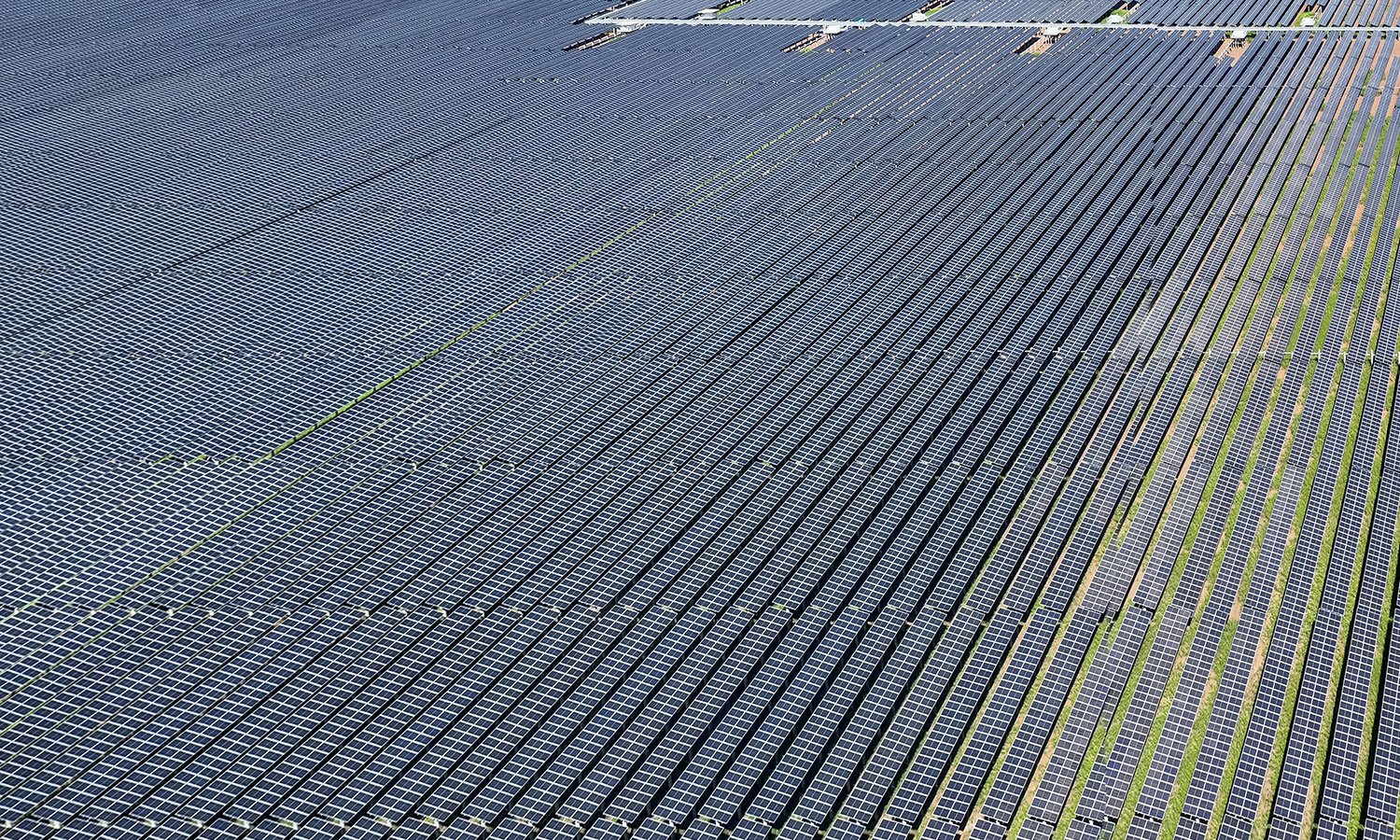
It keeps large-scale solar over 20 acres out of Commercial and Industrial districts and leaves it open in Agricultural and Rural Residential districts.
That is not neutral zoning. That is a funnel.
It points large-scale solar away from the places that make the most sense and straight toward farms, wells, homes, and families.
That means any developer wanting to develop a large scale solar field to go with a battery energy storage system only has one place in Oshtemo Township – Rural Residential areas since the agricultural area was removed from the master plan.
Even the Experts Disagree With Oshtemo’s Choice
U of M’s Graham Sustainability Institute — one of the expert resources brought in by Oshtemo leadership — makes it clear in Planning & Zoning for Solar Energy Systems: A Guide for Michigan Local Governments that solar energy systems should be evaluated by scale, land-use context, and compatibility. The guide does not treat Industrial districts as off-limits for principal-use solar. In fact, it recognizes that different scales of solar can fit into different land-use settings when properly planned.
Residents should be asking whether this creates a spot-zoning-like outcome — not necessarily in the technical legal sense, but in the practical sense: one set of landowners is protected, while another set is singled out to absorb the impacts.
That Is a Policy Choice
This did not happen by accident. The ordinance allows smaller solar energy systems (SES) in Industrial and Commercial districts, but not large principal-use solar. There may be a reason. Industrial and Commercial land is often reserved for future business growth, jobs, infrastructure, tax base, warehouses, manufacturing, and commercial development. But if that is the reason, the Township should say so clearly.
And then it needs to answer the harder question: Why is Industrial land considered too valuable or inappropriate for large-scale solar, while Rural Residential land is considered acceptable?
This Is Not Protective Planning
It is normal for a township to regulate large-scale solar differently than rooftop or accessory solar. It is also normal to require special land use review for major energy projects. But it is not protective planning to exclude large-scale solar from Industrial and Commercial districts while allowing it in Rural Residential areas.
Even the Graham Sustainability Institute – one of the experts brought in by Oshtemo leadership makes it clear in its Planning & Zoning for Solar Energy Systems: A Guide for Michigan Local Governments that all scales of solar energy systems are appropriate in industrial zones – so why is Oshtemo saying “No”. Is it to ensure all solar and battery projects are directed into the Rural Residential area? A twist on spot zoning?
Industrial zoning exists for a reason. It is where communities usually expect more intense uses, larger equipment, utility infrastructure, truck access, and greater separation from homes. Rural Residential zoning also exists for a reason. It is supposed to protect homes, wells, farms, animals, children, open space, and rural character.
If Industrial land is being protected from large-scale energy development, Rural Residential land should not become the default dumping ground.
Rural Residential Land Is Not Empty Land
Rural Residential land is not vacant just because it has fields, woods, farms, or larger parcels. It is where people live. It includes homes, wells, children, farm animals, specialty farms, wetlands, wildlife, drainage systems, and rural roads. Large energy projects can change the character of an area for decades. They can affect views, drainage, construction traffic, emergency access, noise, property expectations, and future land use. That is why zoning matters.
The question should not be, “Where is there open land?” The question should be: Where is this use most compatible and least harmful?
This Matters for Battery Storage Too
This same planning problem matters as Oshtemo considers battery energy storage systems. Battery storage facilities are not ordinary residential uses. They are utility-scale energy infrastructure. They involve large equipment, transformers, interconnection equipment, emergency response concerns, noise, security fencing, access roads, stormwater review, and long-term site control.
Those impacts do not disappear just because the parcel is large. A rural residential area should not become the path of least resistance for major energy infrastructure.
If large-scale solar is not considered appropriate in Industrial, then residents deserve to know why large-scale battery storage would be considered appropriate next to rural homes and farms.
Oshtemo Should Learn From Nearby Solar Fights
Other Michigan communities are already seeing what happens when large energy projects are pushed into residential areas. Once developers sign leases, invest in engineering, and start the approval process, residents are often left fighting from behind. Oshtemo has a chance to do better.
The Township should write protective siting standards now — before residents are forced to fight project by project, parcel by parcel. Good planning should protect people first, not just preserve land for future industrial development.
Questions Residents Should Ask
Residents should ask the Township:
- Why does the current solar ordinance exclude large principal-use solar from Industrial and Commercial districts?
- What planning finding supports allowing large-scale solar in RR Rural Residential but not Industrial?
- If Industrial land is being preserved for future development, what is being done to preserve Rural Residential neighborhoods?
- Has the Township compared Industrial, Commercial, Agricultural, and Rural Residential sites based on homes, wells, wetlands, roads, substations, transmission lines, emergency access, and environmental risk?
- Will the Township require utility-scale energy developers to prove that less harmful sites were considered?
- And if large-scale solar is not appropriate in Industrial, why would large-scale battery storage be appropriate next to rural homes?
Rural Residents Should Not Be Treated as the Easy Option
The issue is not whether solar or battery storage can exist somewhere in the Township. The issue is whether Oshtemo is making fair, careful, and protective land-use decisions. Right now, the solar ordinance appears to protect Industrial and Commercial districts from large-scale solar while allowing that same large-scale use in Rural Residential and Agricultural areas. That is backwards.
Rural Residential land should not be treated as disposable.
Residents deserve a zoning ordinance that protects people first — not one that shields future industrial land while shifting large utility-scale energy projects into residential backyards.